Industrial Drill Regrinding Equipment
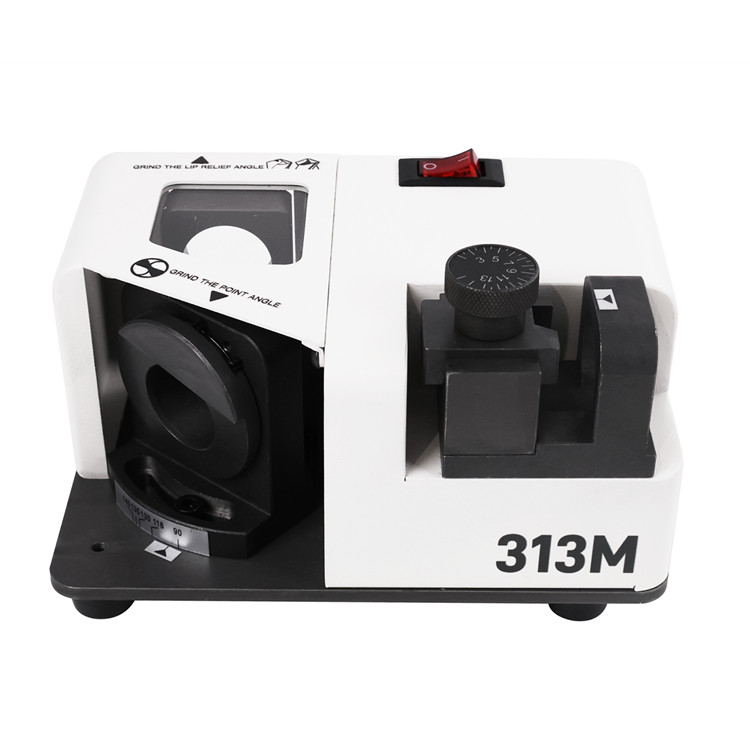
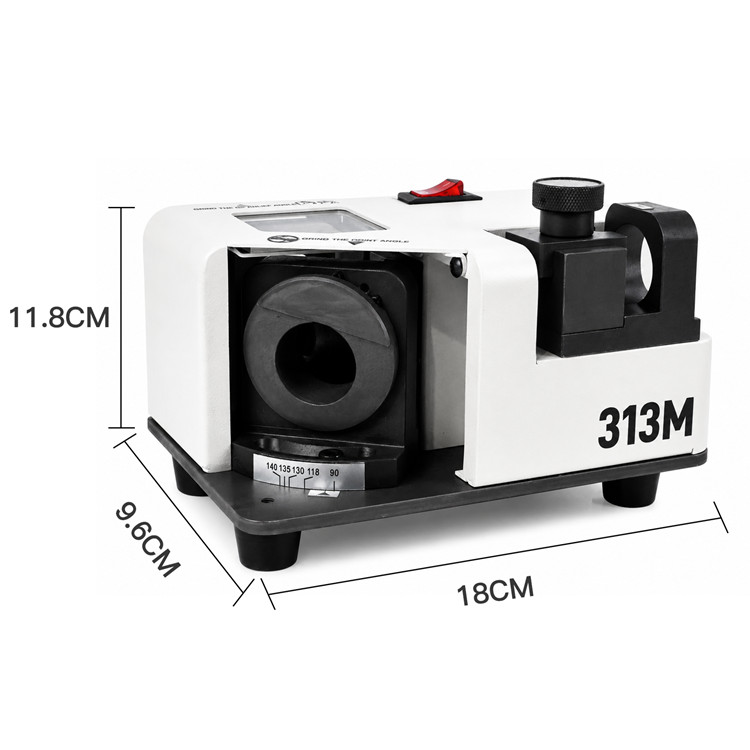
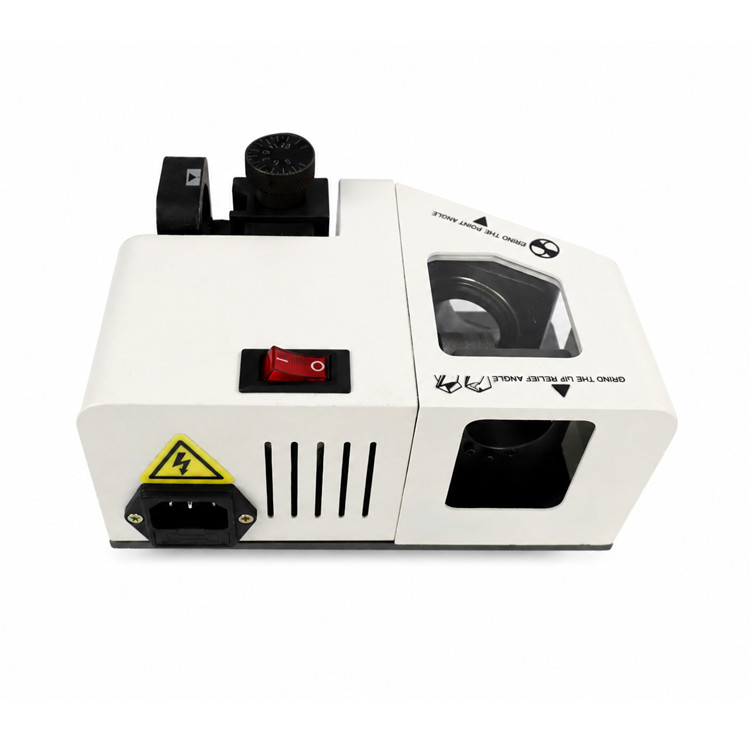
The 313M drill grinding machine is a compact, integrated precision sharpening device specifically designed for standard straight-shank twist drills ranging from Φ3 to Φ13 mm. Equipped with a standardized ER20 clamping system and a high-speed, stable grinding structure, it enables ordinary operators to quickly master the process—within just three minutes—repairing drill point angles, clearance angles, and web bevels all in one operation without requiring skilled grinding technicians.
Compact in size and featuring a portable handle, the machine can be conveniently placed beside CNC machines or at machining workstations for on-site drill refurbishment, eliminating the need for outsourcing grinding services. This significantly reduces tool procurement costs and ensures consistent drilling accuracy. It is an ideal, cost-effective tool maintenance solution for small to medium-sized machining workshops, mold factories, and hardware component manufacturers.
Mainstream Industry Application Scenarios
Mold Manufacturing Industry: Drilling holes in mold steel and ejector pins; frequent repair of worn twist drills to reduce mold tool consumption;
General Machinery Parts Manufacturers: Batch drilling of carbon steel, stainless steel, and aluminum parts to ensure stable drilling dimensional accuracy;
CNC Machining Shops: On-site regrinding of drill bits at workstations, reducing downtime waiting for sharpening;
Hardware/Fastener Manufacturers: Reconditioning large batches of standard twist drills in a cyclical process, reducing procurement costs for consumables;
Auto Repair Shops and Small Custom Machining Workshops: Compact and portable, suitable for daily maintenance of various drill bit sizes.
Key Product Advantages of the 313M drill grinding machine
1. Comprehensive Clamping Range: Covers 3–13 mm
The machine comes standard with a full set of ER20 collets, covering ten mainstream drill diameters: Φ3/4/5/6/7/8/9/10/11/12/13. A single machine can handle the sharpening of the vast majority of standard twist drills in the workshop, eliminating the need for multiple sharpening machines and saving on workshop floor space and equipment procurement costs.
2. Intuitive Operation, No Prior Experience Required
Featuring a positioning-based clamping structure, the collet precisely locks into the corresponding size slot. The process requires only three steps—clamping, positioning, and rotational grinding—to achieve the desired result. There is no need for manual adjustment of complex angles. New employees can produce symmetrical drill tips consistently after minimal training, eliminating issues such as skewed point angles and poor centering caused by manual sharpening.
3. Compact and Portable Workstation Design
The machine features a lightweight, integrated structure with a metal carrying handle on top. It occupies minimal floor space and can be placed directly beside machining centers or lathe workstations, allowing for on-site, immediate repair of worn drill bits. This reduces time wasted on transporting tools back and forth and waiting for grinding during downtime.
4. Complete Set of Standard Accessories—Ready to Use Out of the Box
Ships pre-installed with a 150-grit original grinding wheel, along with an ER20 collet, a full set of Allen wrenches for assembly and disassembly, and a GB-standard power cord. All accessories are organized and stored by category, so no additional supplies are needed upon receipt. Simply unpack, plug it in, and start grinding drill bits in bulk.
5. Low-Consumable Operation with Optional Grinding Wheel Replacement
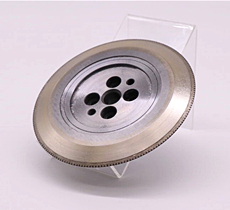
The standard 150-mesh universal grinding wheel is designed for high-speed steel drill bits; replacement grinding wheels for carbide and cobalt-containing drill bits are available for purchase as needed. Grinding wheel replacement is simple, and ongoing consumable costs are low, significantly reducing the long-term expense of purchasing new drill bits.
6. Stable Grinding Precision, Improved Drilled Hole Yield
The machine’s mechanical positioning ensures symmetrical front angles and uniform back angles at the drill tip. After regrinding, the drill bits exhibit excellent centering performance, resulting in burr-free holes with smooth walls. This reduces workpiece scrap caused by drill bit wear and improves the workshop’s overall machining yield.
Standardized Simplified Operating Procedure
Match the drill bit diameter, select the corresponding ER20 collet, and insert it into the ER20 chuck;
Insert the worn twist drill to be reground into the collet, tighten it, and load it into the machine’s grinding station;
Start the machine’s motor and rotate the chuck according to the positioning scale to complete the grinding of both cutting edges;
Remove the drill bit, visually inspect the symmetry of the drill tip, and it is ready for use in drilling operations.